

Student Research
HACC supports student research, including mentored investigations and inquiries conducted by undergraduate and graduate students that aim to make a scholarly or artistic contribution to knowledge. Student research can employ various methods ranging from the scientific and systematic to more creative and intuitive approaches like musical compositions or art projects. While doing research, students enjoy many opportunities for building networks with faculty, peers, and community members.
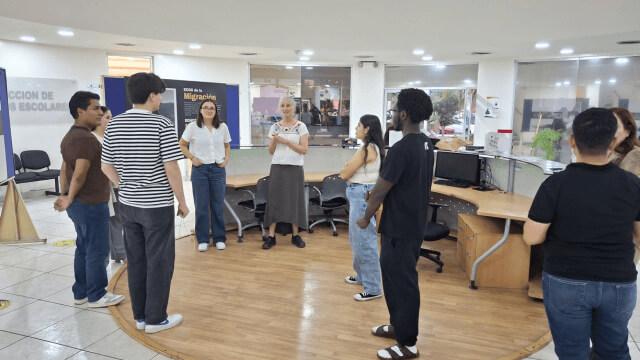
An example of a participatory response used to understand the impact of the CCP pop-up exhibition.
91 students in Nursing and Art worked closely with faculty mentors on PhotoVoice, curation, and engagement.
Nursing Students Research
In 2024, when the Tucson sector was experiencing the highest influx of migrants in U.S. history—with around 1,000 people arriving daily—nursing students from three institutions came together to explore a profound question:
What does it mean to experience migration in the borderlands and be well?
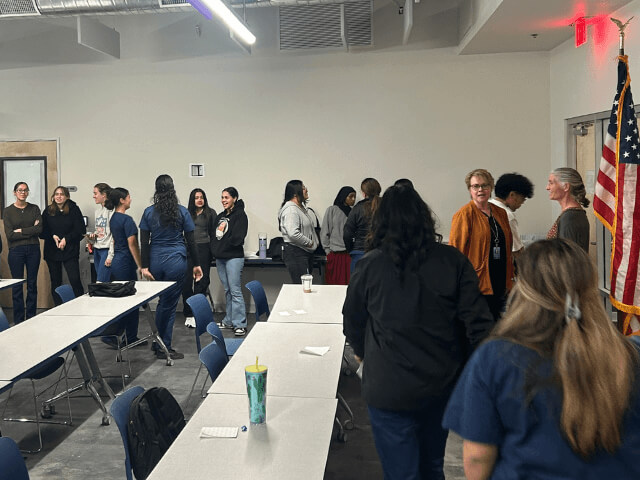
Through the transformative lens of photovoice, students from the University of Arizona College of Nursing, Universidad de Sonora (UNISON) in Hermosillo, and Instituto Interamericano de Educación Superior para la Salud (IIESS) in Guaymas embarked on an unprecedented binational collaboration. This partnership transcended traditional academic boundaries, creating a living laboratory for understanding the impact of migration on health and wellness.

The project unfolded through intensive 2-day cross-border immersion experiences. The U of A students journeyed south for a deep engagement at migration centers, Indigenous culture centers, and Mexican nursing campuses, while Mexican students traveled north for parallel immersions at organizations like Humane Borders and the Josefina Ahumada Worker Center in Tucson, alongside visits to The U of A’s nursing facilities.


These concentrated exchanges allowed students to fully absorb the complexities of migration from multiple cultural and institutional perspectives.
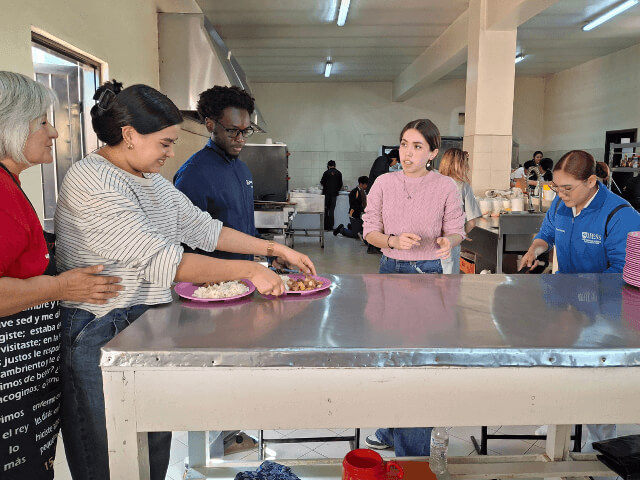
Students prepare traditional foods.
Working as unified bi-national teams, all students and faculty collaborated at Casa Mariposa in Nogales, organizing a health fair for migrant residents, programming for children, and applying their cross-cultural learning in direct service.
At the pedagogical heart of this initiative was NURS 250 Health Equity: Healing in Urgent Times, where faculty guided students through the photovoice methodology, with Mexican participants joining virtually to understand U.S. social determinants of health and migration dynamics.
Together, future healthcare leaders created visual narratives that would become the centerpiece of the “Echoes of Migration” exhibitions in Hermosillo and Guaymas.
The pop-up exhibitions portrayed migration experiences through visual stories, inviting audiences into meaningful dialogue about what it means to be well, forms of resilience, and the experience of belong in the borderlands. The project fostered a new social imagination for addressing migration with compassion, healing, and hope.
Museum Students Research
The second phase of the photovoice project involved a unique collaboration with Dr. Carissa DiCindio and graduate students in art museum education. They applied a range of sensory practices—use of the five senses—to deepen the creation of meaning through photographice images and the written word.
The Art Museum Education students helped Nursing students move beyond surface-level documentation to create narratives that invited viewers into the full human experience of their subjects.
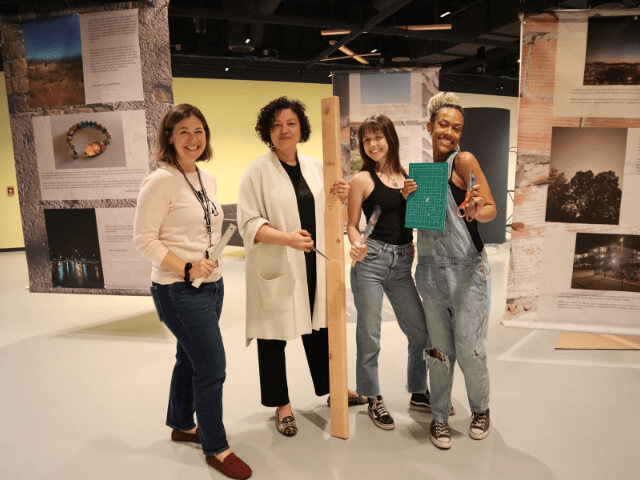
UA Student Preparators Chloe Riley and Melanie Richardson install the pop-up exhibition at the Center for Creative Photography.
Multisensory awareness resulted in photovoice works that resonated intellectually and emotionally. The outcomes exemplify a holistic approach to meaningful community dialogue about health and belonging in the borderlands.
After practical research with sensory and walking methodologies, graduate students in art museum education analyzed the photographs and narratives, generated themes and designed experiences for audiences to participate in a pop-up exhibition at the Center for Creative Photography.
